
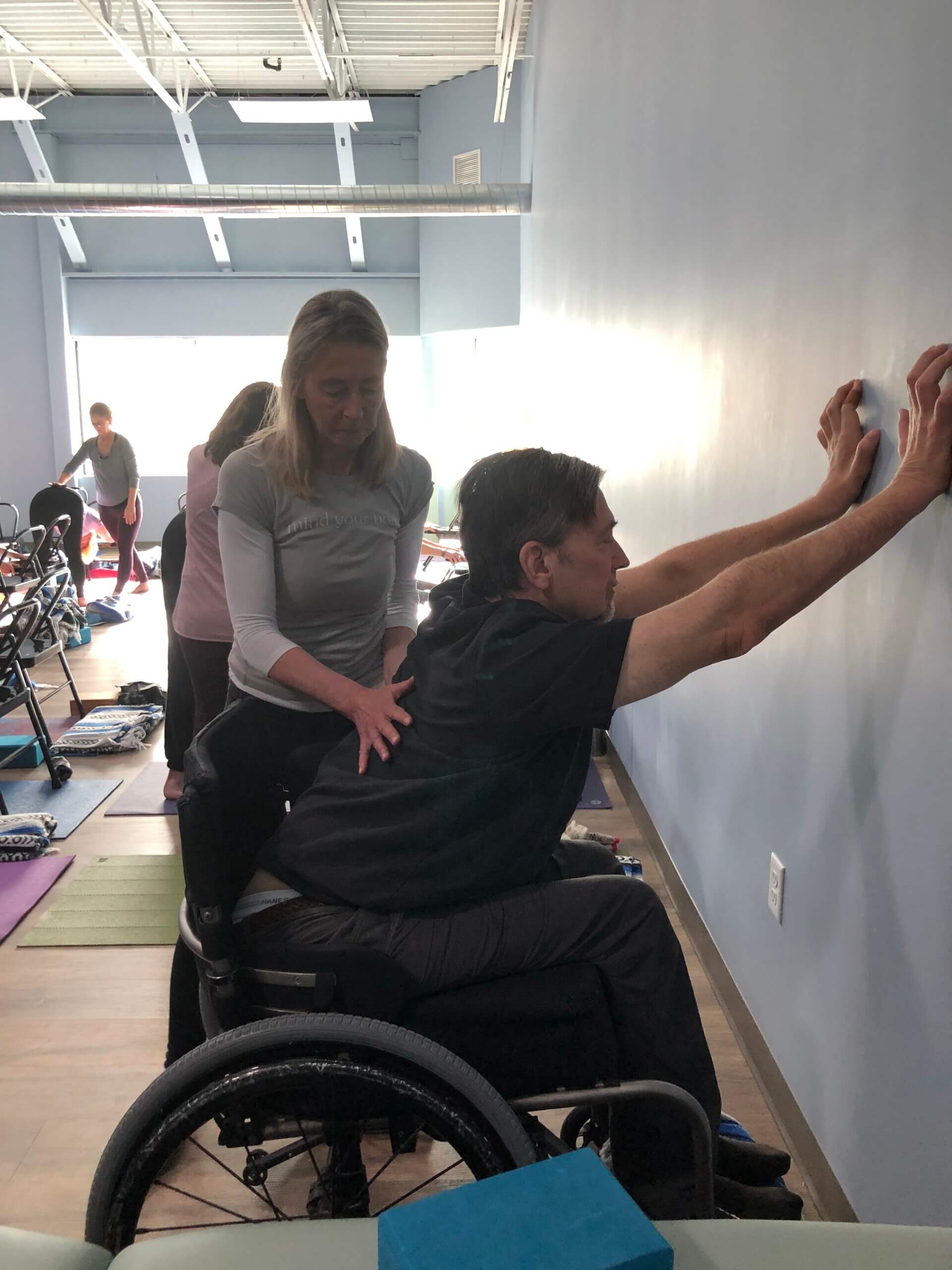
In asana, the body teaches the mind through movement, alignment, and adjustments. Yoga poses create space, channeling physical and mental sensations that can be salient or subtle, vitalizing or calming. The sensations of space are inflection points which guide the symmetrical and asymmetrical places in the mind and body.
From a stable seated position, ground down to feel and sense the feet and sit bones, then extend up beyond the top of the head. Extend the arms, palms, and fingers towards the floor and lift under the collar bones. Inhale and place the hands shoulder-distance apart on a wall or solid surface. Open the palms and spread the fingers, connecting the hands to where you can feel or sense the feet. Keeping the hands and feet engaged, lengthen the back. Notice the relief. Continue grounding and engaging the arms to press down through the legs and bring attention to the space between the shoulder blades. Soften that area, imagining it diffusing in every direction. It takes awareness and effort to access the mid-back. However, it is worth the practice, as it is the sweet spot behind the heart. Pause in that space and invite it to gradually connect the loud and quiet places in the body.
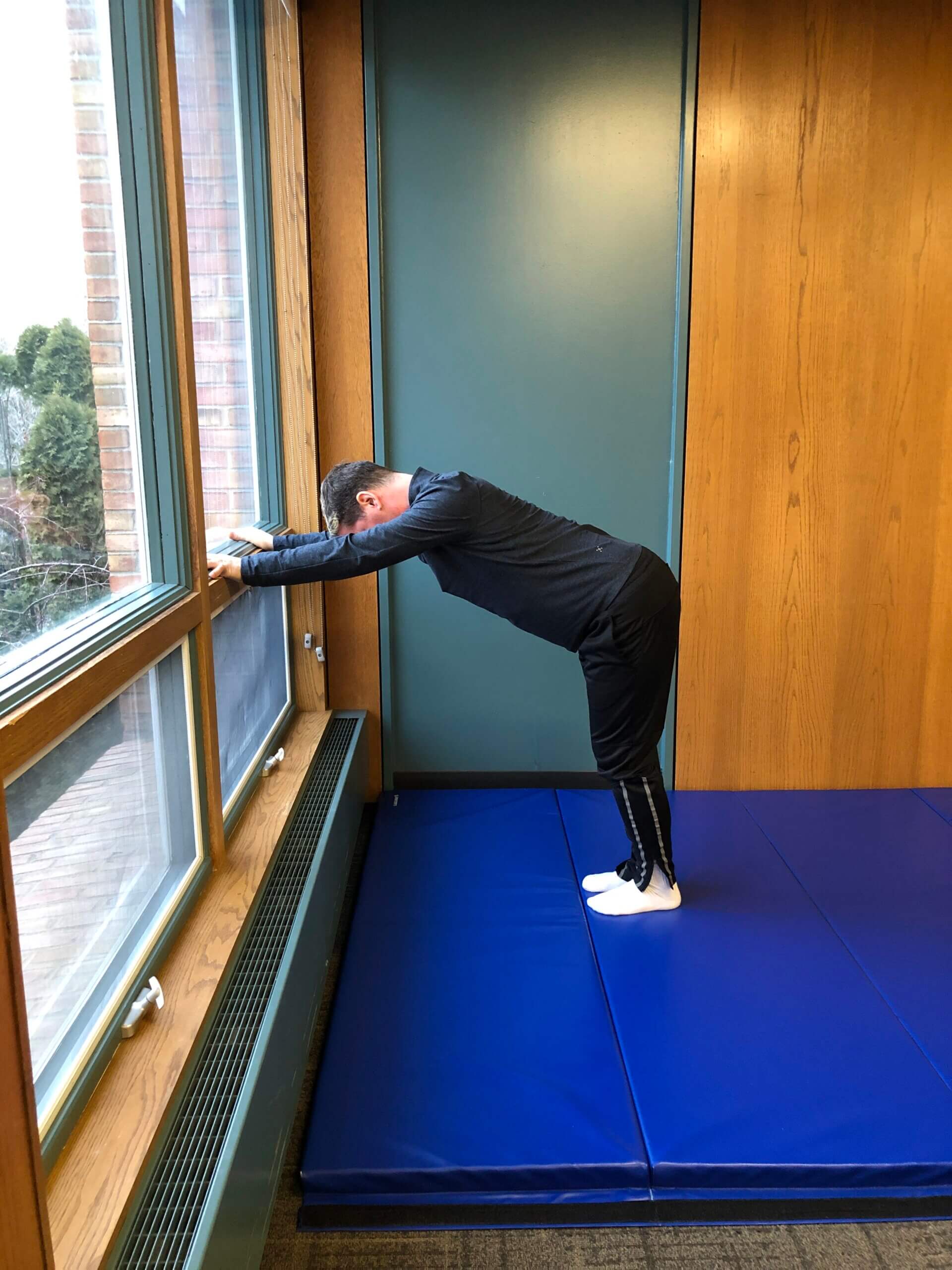
Options:
- Have partner place their hand lightly between the shoulder blades for a few moments. Release and repeat. Notice the effects
- Play around with the distance between, and the height of the palms. Determine which position offers the most well being
- Create inflection points by slightly rounding the back into a concave position, followed by slightly extending up to a convex position.
- In lieu of extending the torso forward, place a vertical thin rolled blanket against the back of the chair. Sit back, allowing the reference of the blanket to create opening across the chest
- Practice sensing space in the ankle, knee, elbow and shoulder joints
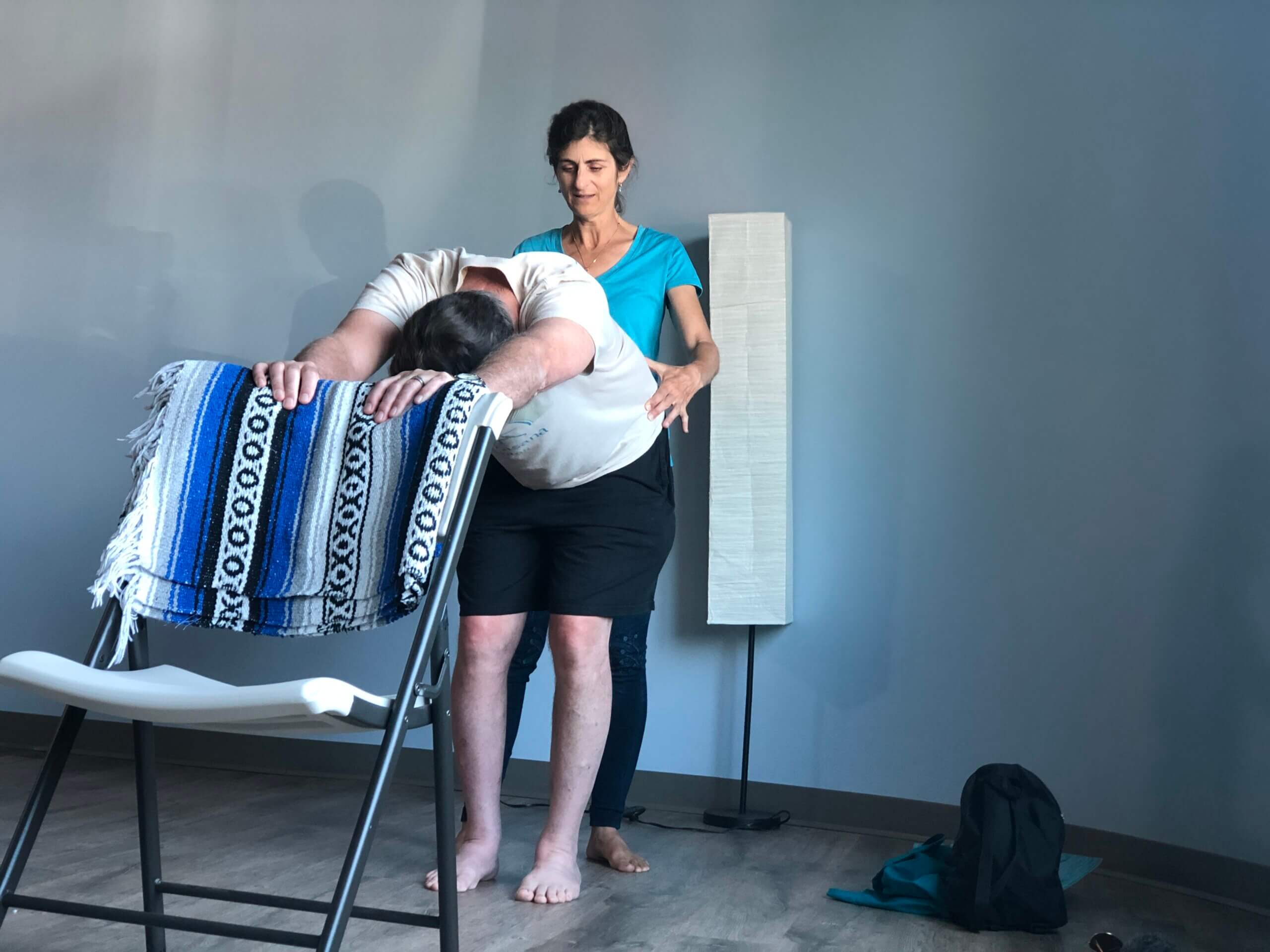
Benefits:
- Space in the low back is essential for everyone, especially for people who sit often.
- Encourages spinal clarity and activation
- Integrates awareness and sensations throughout the body
- Bringing attention to the back body is calming
- Effort and ease, rooting and rising take place
Click this link for an 8 minute reflection on Space and Lightness by Mind Body Solutions founder, Matthew Sanford